
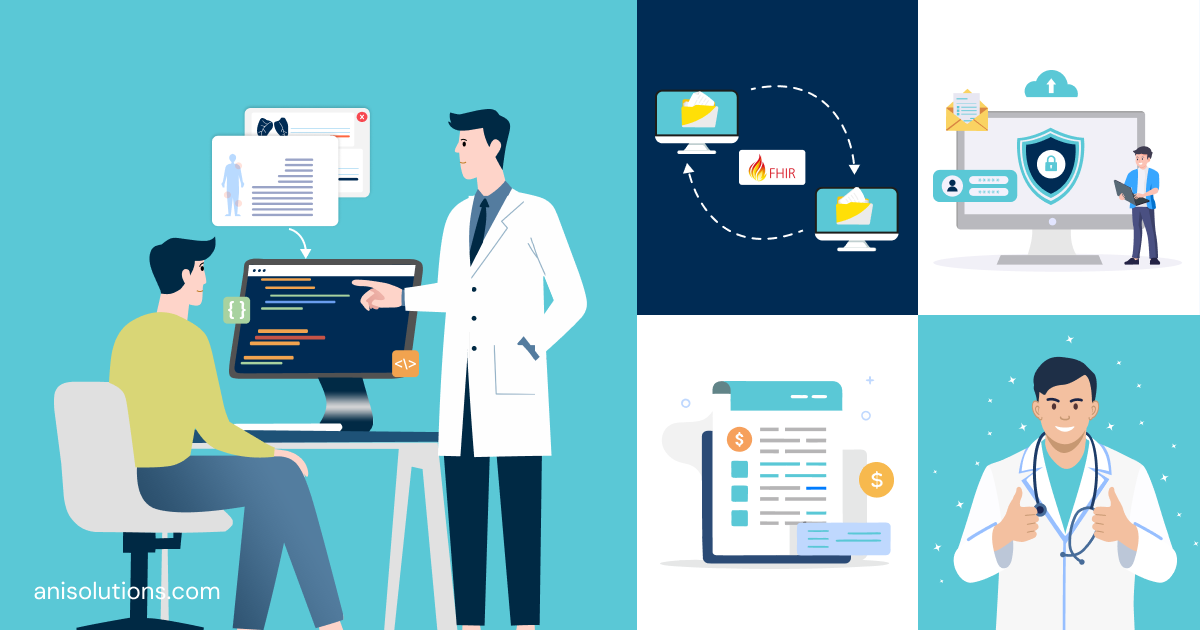
Why Healthcare Domain Expertise Matters for EHR Developers
Most of the time, developing software means developers need a strong skill set in developing languages and tools. However, in healthcare, this is not enough, as an EHR developer also needs to have a clear understanding of healthcare workflows, how clinicians work, and specialty-specific needs.
Because if a developer does not clearly understand all these factors, the EHR will be incomplete, no matter how strong their technical skills are. Yet, many healthcare organizations overlook this factor during the hiring process, leading to hiring EHR software developers who don’t have healthcare IT expertise.
The result? A custom EHR development process that is focused solely on building a functional EHR, not an intuitive and compliant EHR system. That’s why, when healthcare organizations are looking for developers, healthcare domain expertise and experience should be the non-negotiable factors.
In this blog, we will explore why they should be fundamental and how organizations benefit from hiring an EHR developer who understands healthcare, not just coding.
Let’s dive in!
Why Generalist Developers Struggle with EHR Systems?
When a generalist builds an EHR, he does it like any other software project, but they don’t understand that custom EHR development works differently. The healthcare environments operate under time pressure, have complex workflows, and strong regulatory requirements. And these factors are easily underestimated without hands-on healthcare IT expertise.
One of the biggest challenges these developers face is the understanding of day-to-day clinical workflows. Clinicians don’t have time to navigate multiple screens and click through unnecessarily long forms during patient visits. And when developers don’t understand this, it leads to a system that looks functional but not intuitive.
Another common issue is confusion between raw data and structured medical data. In healthcare software development, data must be standardized and coded to support billing, interoperability, reporting, and long-term clinical use. The generalist developers consider lab reports and visit notes as free text, limiting the data usability and creating problems for care coordinators and compliance.
Moreover, designing decisions made without a clinical context can also unintentionally increase documentation burden. Extra clicks, redundant data entry, and overly rigid forms may seem minor, but they create issues over time across hundreds of patient encounters. Instead of improving efficiency, poorly designed custom EHR development can quietly add to clinician burnout.
Finally, generalist teams face a higher risk of compliance and security gaps. Healthcare regulations demand role-based access, audit trails, and secure data handling from day one. Without healthcare IT expertise, these requirements are often addressed too late, exposing organizations to operational and legal risk.
What Healthcare Domain Expertise Really Means?
When it comes to healthcare domain expertise, they go far beyond just knowing how to build software for hospitals and clinics. For an EHR developer, it means deeply understanding how doctors, nurses, and administrative staff work daily, and designing systems to work around them, not the other way around.
The developers need to have familiarity with clinical terminology, documentation standards, and billing logic. They must understand that diagnoses, procedures, medications, and care plans need to be structured and tied to coding systems for better compliance and faster reimbursement.
Developers also need to know the best way to design workflows and how to optimize them for efficiency and speed. Meaning, they must know how to reduce clicks, eliminate redundant data entries, and lower cognitive load. When the developers have true expertise, they develop interfaces that align with how clinicians think and work, making operations faster and more accurate.
Most importantly, healthcare domain expertise results in systems that clinicians actually adopt. In custom EHR development, success isn’t measured by feature count, but by whether clinicians trust the system enough to use it consistently. The adoption rate is high when technology makes work easier rather than forcing or making it difficult.
How Domain Expertise Improves Compliance & Interoperability?
In healthcare, compliance and interoperability are the foundational architectural decisions and cannot be added after development is complete. Here, an experienced developer develops a system that embeds HIPAA compliance and patient data protection from the start. At the same time, a developer who has low experience working with the healthcare domain adds these factors as an extension rather than a foundation.
Having healthcare domain expertise ensures that EHR has robust access controls, audit trails, consent management, and secure data handling. Beyond security, domain expertise also has a crucial part in building interoperability into the system.
An EHR system must be connected to labs, imaging centers, pharmacies, and billing systems for better coordination across the network. This is only possible when the system is seamlessly integrated, and healthcare IT experts understand how structured data flows from system to system without losing accuracy and context. This knowledge prevents integration challenges in the long run, giving clinics a seamless data exchange and avoiding data silos.
Finally, a true EHR development expert in the healthcare domain understands that regulation and interoperability requirements evolve over time and prepares for the change. This future-proofing custom EHR differentiates a generalised developer from an expert in healthcare technologies.
The Business Impact of Hiring the Right EHR Developer
When you hire the right EHR developers with healthcare IT expertise, the impact for healthcare organizations is both measurable and long-term. With domain expertise, developers build a system that adapts the workflows and supports how the clinicians and administrators work, rather than forcing them to find workarounds and waste time.
However, if you hire a team with just technical expertise, they deliver an EHR that is functional, but it requires ongoing fixes and costly rebuilds, making it an expensive mistake. Over time, these hidden inefficiencies increase operational costs, slow growth, and limit the system’s ability to scale with the changing healthcare landscape.
| Business Impact Area | Hiring the Right EHR Developer | Hiring a Generalist Developer |
| Clinician Adoption & Training | Faster onboarding with minimal training due to intuitive workflows | Longer training cycles and resistance to system usage |
| Billing & Documentation Accuracy | Fewer coding and documentation errors, cleaner claims submission | Higher error rates leading to denials and rework |
| Scalability & Flexibility | Systems adapt smoothly as clinical workflows and patient volume grow | Frequent redesigns are required as requirements change |
| Long-Term Cost | Lower lifetime cost due to reduced fixes and maintenance | Higher cumulative costs from repeated corrections and upgrades |
Conclusion
In a nutshell, the custom EHR development is different from how other software is developed. It involves compliance, regulation, and interoperability as the foundation. That’s why the EHR developers must also understand the healthcare domain deeply and clearly, along with the interoperability standards and compliance requirements.
However, if the EHR developers are not domain experts, then the developed EHR is only functional, not compliant, and not built to adapt to the clinical environment. It becomes an expensive mistake for the organization.
So, it’s important to choose the right EHR developer and build a team that understands the clinical terms and workflow designs. If you are looking for developers to build your custom EHR, click here to hire EHR developers who deliver a scalable and compliant EHR.
Frequently Asked Questions
- What is the difference between a general software engineer and a specialized EHR developer?
A general software engineer focuses on technical functionality. A specialized EHR developer understands healthcare workflows, clinical documentation, billing logic, and compliance—building systems clinicians can actually use without slowing care delivery.
- How does an EHR developer ensure a system is compliant with 2026 ONC regulations?
By designing compliance into architecture—role-based access, audit logs, interoperability, and patient data controls—aligned with Office of the National Coordinator for Health IT rules, not retrofitted after development.
- Why is knowledge of HL7 FHIR critical for modern EHR developers?
FHIR enables standardized, real-time data exchange across healthcare systems. EHR developers who understand HL7 FHIR can build interoperable systems that integrate cleanly with labs, billing, RPM, and third-party platforms.
- What are the risks of hiring a firm without US healthcare domain expertise?
You risk compliance gaps, billing errors, poor interoperability, and low clinician adoption. Teams unfamiliar with US healthcare workflows often deliver EHRs that function technically but fail operationally and financially.
- How can a specialized developer reduce clinician burnout through UI design?
Aligning the UI with real clinical workflows reduces clicks, supports smart defaults, minimizes data re-entry, and enables intuitive navigation. Good EHR UI reduces cognitive load rather than adding documentation friction for already busy clinicians.
- What certifications or experience should I look for when vetting an EHR developer?
Look for hands-on EHR builds, US healthcare project experience, HL7/FHIR implementation work, HIPAA-focused security design, and exposure to clinical documentation and billing workflows—not just generic software certifications.