
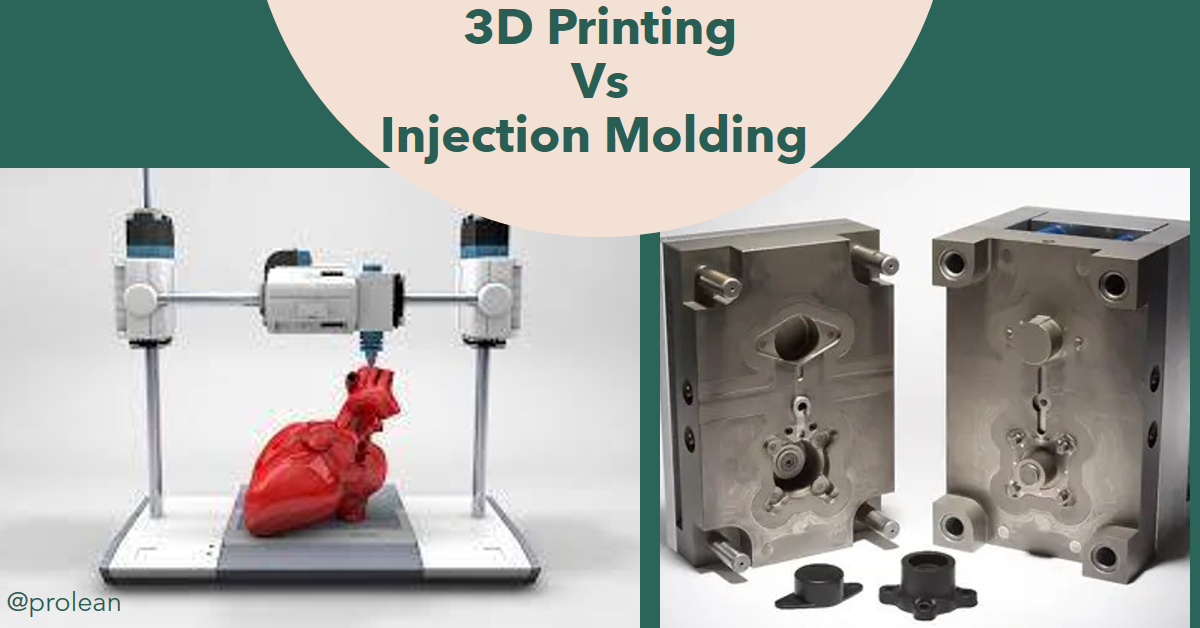
Injection Molding vs 3D Printing: Which is Better?
Every day, companies have to choose how to make plastic parts. The two most talked-about options in 2025 are plastic injection molding and 3D printing (also called additive manufacturing). Both work great, but they are good at different things. This article compares them on cost, speed, quality, materials, quantity, and real use cases so you can pick the right one for your project.
Cost Comparison – Tooling vs No Tooling
Injection molding has a high start-up cost because you need a steel or aluminum mold. A simple mold costs $3,000–$10,000. A complex or multi-cavity mold can run $20,000–$100,000+. Once the mold is paid for, each part costs pennies. For a detailed list of advantages and disadvantages of injection molding, check that out.
3D printing has almost zero start-up cost. You just need the plastic filament or resin and a design file. There is no expensive mold. That makes 3D printing cheaper for 1–200 pieces. After about 500–1,000 pieces (depends on part size), injection molding becomes cheaper per part.
Speed – Prototypes vs Production
If you need a part tomorrow, 3D printing wins easily. A desktop printer can finish a small part in a few hours. Industrial 3D printers can make 50–100 prototype parts overnight.
Injection molding takes longer to start. Building the mold usually takes 4–10 weeks. After the mold is ready, the machine can spit out hundreds of parts per hour. For big runs (5,000+ pieces), injection molding is much faster overall.
Surface Finish and Part Quality
Injection-molded parts come out of the mold shiny and smooth. They look and feel like final products straight away. Tolerances can be ±0.02 mm on good molds.
Most 3D-printed parts have visible layer lines and need sanding, vapor smoothing, or painting to look nice. Normal FDM printers give ±0.1–0.2 mm tolerance. High-end resin or metal 3D printers can get closer to injection quality, but they cost a lot more.
Material Choices
Injection molding works with hundreds of real engineering plastics: ABS, PC, nylon, PEEK, TPU, PP, POM, filled materials with glass fiber or carbon fiber, food-grade, medical-grade, flame-retardant, you name it. If you need a reliable plastic injection molding service, options like that cover most needs.
3D printing has fewer choices. Standard printers mostly use PLA, PETG, ABS, ASA, and TPU. High-performance materials like PEEK or carbon-filled nylon exist, but the printers that can run them cost $50,000–$300,000.
Design Freedom and Complexity
3D printing wins here. You can make almost any shape, even moving parts in one print, internal channels, lattice structures, or undercuts without extra cost.
Injection molding needs draft angles, uniform wall thickness, and no deep undercuts unless you add expensive slides or lifters in the mold. Complex geometry can double or triple mold cost.
Quantity – When Each One Wins
- 1–100 pieces → 3D printing is cheaper and faster
- 100–1,000 pieces → it depends on part size and complexity (break-even point)
- 1,000–1,000,000+ pieces → injection molding wins by a mile
Strength and Real-World Performance
Injection-molded parts are usually stronger and more consistent because the plastic is packed under high pressure. The material properties match the official data sheet exactly.
3D-printed parts are often weaker between layers (anisotropic). They can work fine for non-structural items, but most car, medical, or load-bearing parts still use injection molding.
Typical Use Cases in 2025
3D printing is perfect for:
- Prototypes and fit checks
- Custom jigs and fixtures inside factories
- Low-volume custom products (hearing aids, dental aligners)
- Spare parts for old machines
- One-off marketing samples
Injection molding is perfect for:
- Consumer products (phone cases, toys, bottles)
- Automotive parts
- Medical disposables
- Electronics housings
- Anything sold in thousands or millions
Summary Table – Quick Decision Guide
| Need | Winner |
|---|---|
| 1–200 parts | 3D printing |
| 5,000+ parts | Injection molding |
| Super smooth surface | Injection molding |
| Crazy complex shape | 3D printing |
| Medical or food-grade material | Injection molding |
| Need part tomorrow | 3D printing |
| Strong load-bearing part | Injection molding |
Final Answer – Which is Actually Better?
There is no single winner. 3D printing is better for low volume, fast changes, and complex shapes. Injection molding is better for high volume, perfect finish, real engineering materials, and lower cost per part in the long run.
Most smart companies use both: 3D print prototypes, then switch to injection molding when the design is final and volume goes up. For more help on your project, visit MoldPartner.