
The Chandelier Is Not Too Big—It May Just Have the Wrong Visual Weight
There is a particularly frustrating kind of decorating mistake: the measurements are correct, the electrician has finished, and the new chandelier still looks wrong. It may seem crowded even though it fits comfortably above the table. In another room, a fixture with nearly identical dimensions can appear strangely small, as if it is floating without any connection to the furniture below.
The problem is often described as size, but diameter is only part of the story. What the eye notices is visual weight—the amount of ceiling space a fixture appears to occupy. Glass shades, open rings, thick frames, visible bulbs, and empty space all affect that impression. Understanding this can save a homeowner from returning a perfectly good light simply because the wrong shape was chosen for the room.
Begin With the Room at Eye Level
Before looking up, look around. A typical dining room may already contain a long rectangular table, straight-backed chairs, a sideboard, tall windows, and framed artwork. Adding another rigid, linear object overhead can make the room feel more structured than intended. A living room filled with a curved sofa, round coffee table, and arched doorway has the opposite issue: one more circular feature may disappear into the existing shapes.
This is why choosing a chandelier should not begin with a style label such as “modern” or “luxury.” Begin with what the room lacks. Does it need softness, definition, height, or a stronger centre? The answer usually narrows the choice faster than browsing hundreds of attractive product photographs.
When a Room Needs Softer Edges
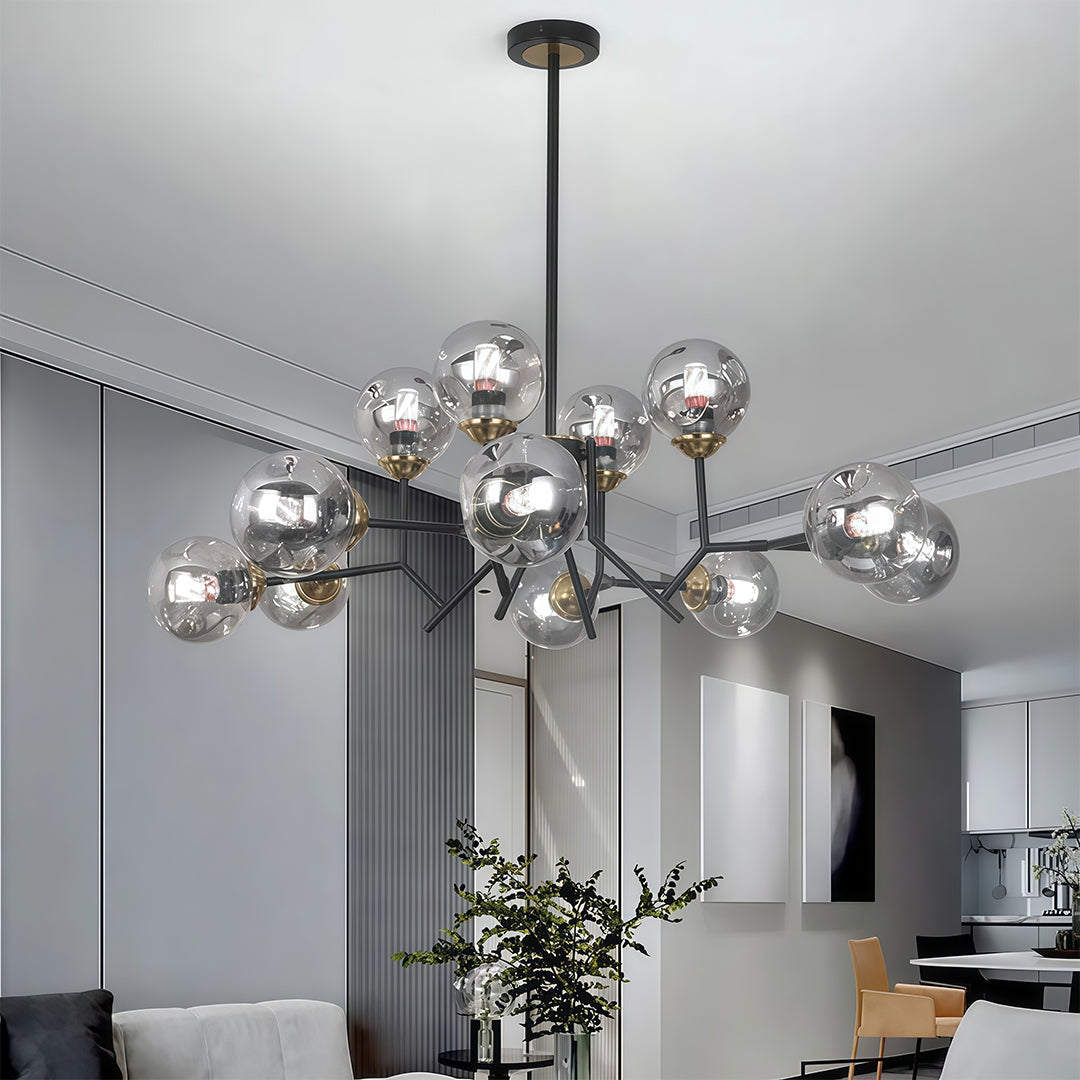
A globe chandelier is useful when a room feels a little too angular. Repeated glass spheres interrupt the long lines of tables, cabinets, shelving, and window frames. The effect can be gentle rather than decorative, especially when the globes are opal or frosted instead of clear.
The number and arrangement of the globes matter. A branching fixture spreads visual interest across a wide dining table, while a compact cluster creates a denser focal point over a round table or reading area. A cascading arrangement uses vertical space and can suit an entryway, but the same design may feel busy above a table where people need clear views across the room.
Glass also changes how heavy the fixture appears. Clear globes reveal the bulbs and frame, so the chandelier feels open even when it is wide. Opal glass hides the inner parts and creates solid white shapes, giving the fixture more presence. Smoked glass can appear lighter during the day but more dramatic when illuminated. These differences are easy to underestimate when judging dimensions alone.
When the Ceiling Needs Structure Without Bulk
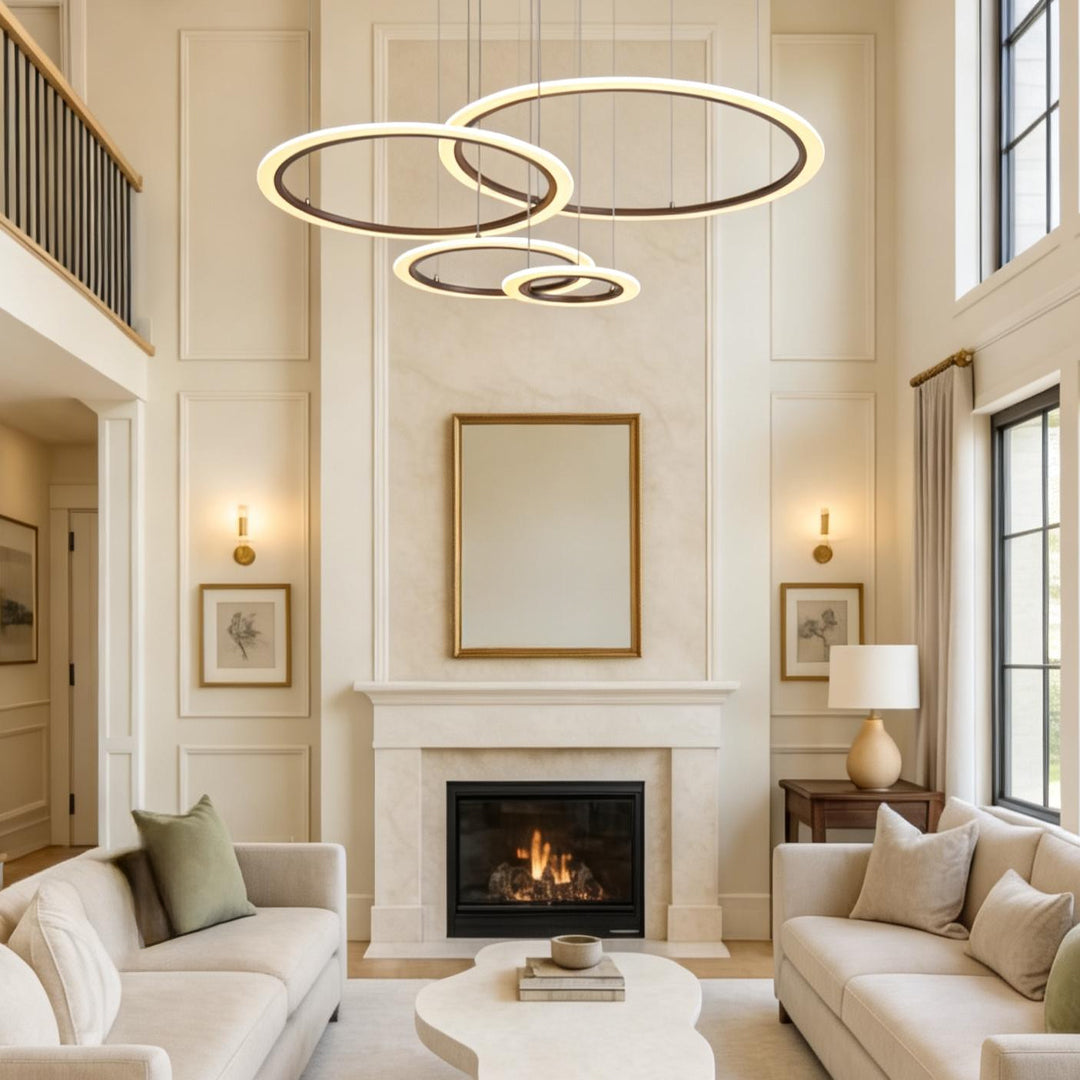
A ring chandelier works differently. Rather than filling space with individual shades, it draws a clean boundary in the air. The open centre allows the ceiling and background to remain visible, which is helpful in rooms where a conventional chandelier would feel dense.
One horizontal ring can visually anchor a dining table without competing with artwork or a detailed feature wall. Multiple rings introduce movement, especially when they are suspended at different heights or angles. That extra movement can be valuable in a tall, quiet room, but it may feel restless in a smaller space already filled with patterns and decorative objects.
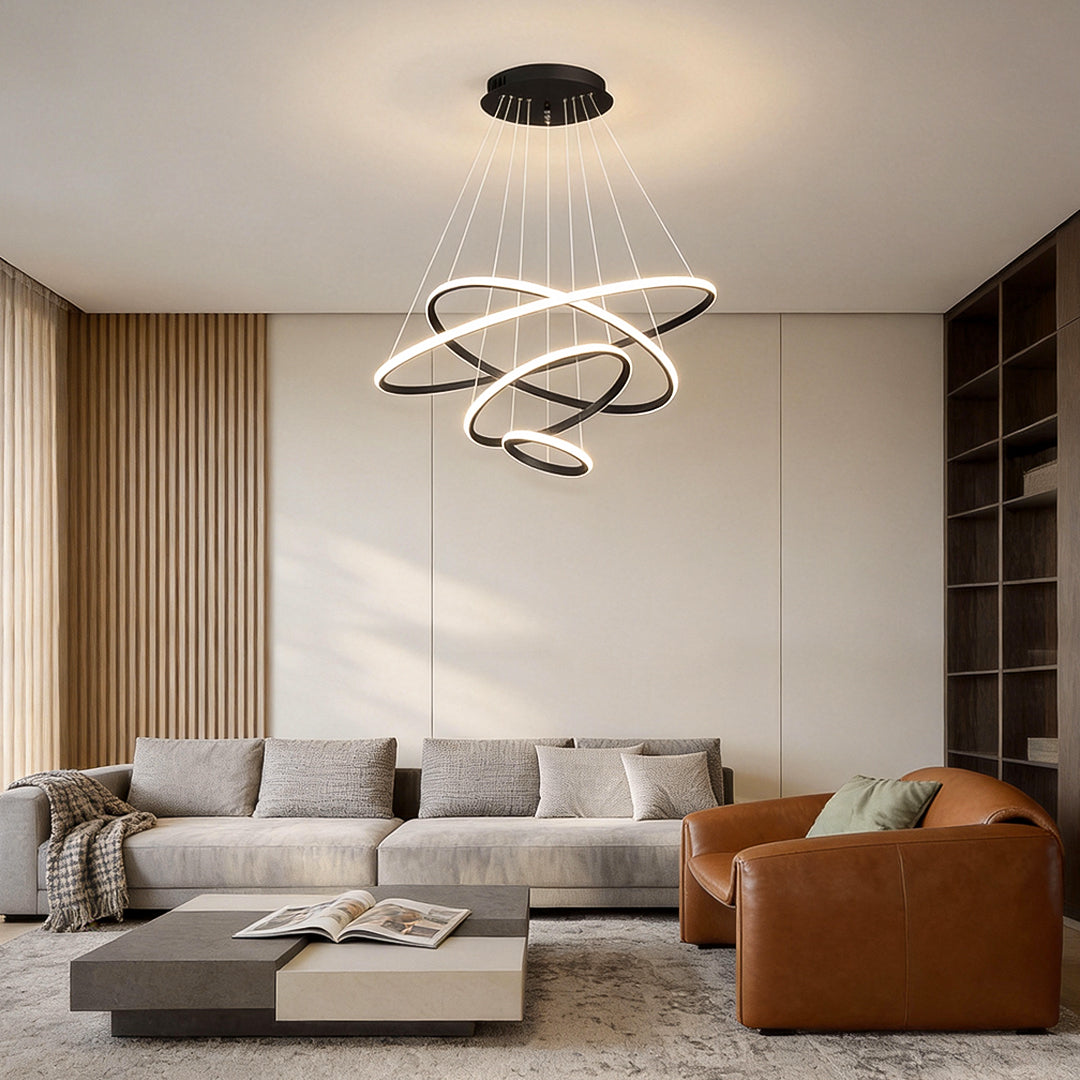
Ring fixtures can also look wider than expected once illuminated. During the day, a slim black or gold frame may almost disappear. At night, the entire glowing circle becomes visible at once. This is why it is worth considering both the unlit outline and the illuminated shape. A design that seems understated in a daytime image may become the strongest feature in the room after sunset.
The Cardboard Test Is Better Than Guessing
Measurements on a product page are difficult to imagine in three dimensions. A practical test requires nothing more sophisticated than cardboard, painter’s tape, and string. Cut or tape an outline matching the fixture’s width, then suspend it at the planned height. It does not need to look attractive; it only needs to occupy the same space.
Leave the outline in place for an evening. Sit at the table, walk through the doorway, and view it from the adjoining room. Check whether it blocks faces during conversation or cuts awkwardly across a window. A chandelier that looks correctly scaled from directly underneath may seem intrusive from the sofa ten feet away.
For a globe design, add a few paper circles to represent the shades. For a ring design, make sure the full outer diameter is visible. This small detail makes the mock-up far more useful because two fixtures with the same overall width can create completely different impressions.
Think About the View From Below
Chandeliers are often photographed from across a perfectly styled room, but people living with them also see them from underneath. This matters in bedrooms, living rooms, and stairwells. Exposed bulbs that look sparkling in a photograph can feel uncomfortable from a sofa or bed. Integrated LED rings may provide an even glow, although the direction of that light still deserves attention.
Dining rooms create another concern. The fixture should be low enough to relate to the table but high enough that people can see one another comfortably. Measure from the tabletop to the lowest globe or ring, not merely to the central frame. Angled rings and branching arms often have low points that are easy to miss in a specification drawing.
Let the Chandelier Solve One Problem
A room rarely needs its ceiling light to provide softness, drama, task lighting, architectural structure, and subtle background ambience all at once. Asking one fixture to do everything usually leads to an oversized or overly complicated choice.
Decide on its main job. Globes may bring curves and a diffused glow to an angular room. Rings may define a furniture zone while keeping the ceiling visually open. Additional light can come from wall lights, floor lamps, recessed fixtures, or under-cabinet lighting. Once the chandelier is allowed to solve one clear problem, choosing its shape becomes much easier—and the final room feels considered rather than simply decorated.