
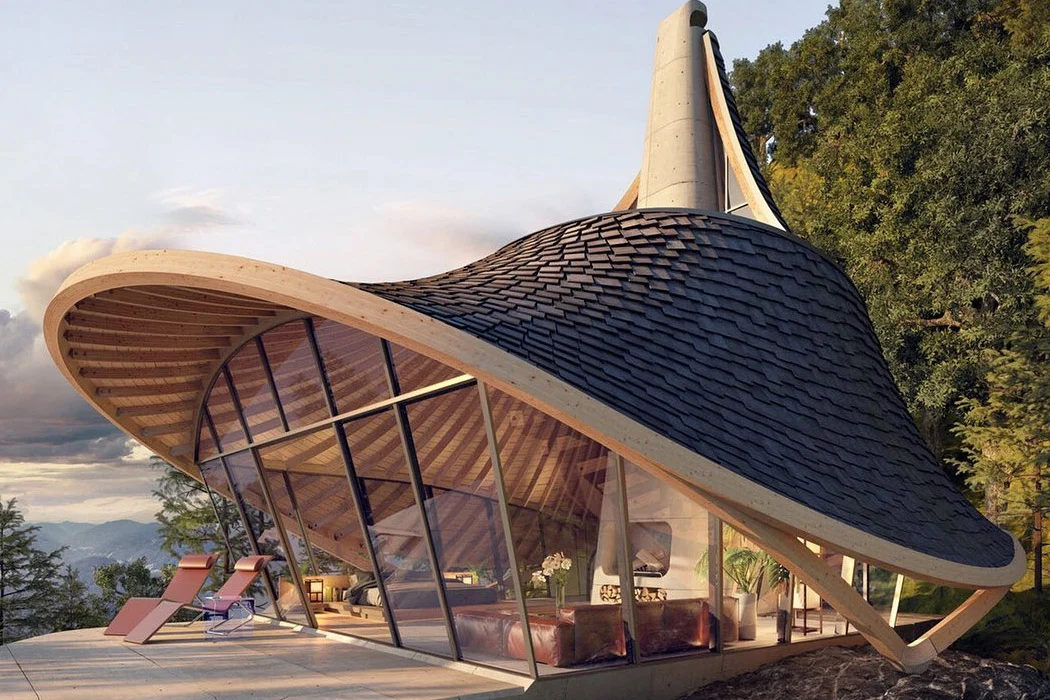
Cabin Architecture Today: Where Luxury Meets Practical Design
Cabin architecture has quietly become the most important discipline in luxury private jet interior design. Not finishes, not branding, not even seating choices on their own. Architecture is the difference between a space that simply looks premium and one that actually works as a unified environment at altitude.
In private jets, architecture is about how volume is divided, how zones relate to each other, and how structure quietly guides behaviour without drawing attention to itself. As expectations rise, cabin architecture is being asked to do more with the same physical envelope, and that’s where design discipline matters.
Architecture begins before aesthetics.
Unlike ground-based interiors, aircraft cabins don’t allow architecture to be decorative. Every structural decision affects weight, balance, certification, and maintenance. That reality forces designers to think like architects rather than stylists.
The starting point is always the shell. Where does the fuselage narrow? Where does it open up? Where do systems need access? From there, designers define zones not by shaping space. A slight shift in ceiling height. A change in floor level. A bulkhead that angles rather than blocks.
Imagine stepping into a cabin where nothing feels chopped up, yet every area has a clear identity. That doesn’t come from just good decoration. It comes from architectural planning that understands how people perceive space in a confined environment.
Zoning is a core principle.
Modern cabin architecture relies heavily on zoning, but not in the obvious way. Zones are no longer created by doors alone. They’re established through proportion, orientation, and visual alignment.
A seating area might be defined by ceiling geometry rather than a wall. A private zone might be offset just enough to feel separate without closing it off. Even the galley can be architecturally integrated so it doesn’t feel like a service interruption within the cabin.
This approach allows cabins to feel larger than they are. Space flows, but purpose remains clear. That balance is central to how modern private jet interiors are built today.
Seating as an architectural anchor
While seating is often treated as furniture, in modern cabins it functions more like built architecture. The placement and orientation of seats define circulation paths, sightlines, and spatial hierarchy.
Seats have to be arranged to control how the space opens and behaves as you move through it. A slight rotation can prevent the cabin from feeling linear. A staggered layout can break up symmetry that feels too rigid.
This is where luxury aircraft seats become architectural elements rather than standalone pieces. Their scale, height, and spacing contribute to the cabin’s overall structure. A poorly chosen seat can disrupt proportions just as much as an ill-placed wall.
Circulation without corridors.
One of the harder architectural challenges in aircraft cabins is circulation. There’s rarely room for true corridors, yet movement still needs to feel natural and uninterrupted.
Modern cabin architecture addresses this by removing obstacles rather than adding paths. Furniture edges align with walk lines, and floor transitions are subtle but directional. The result is a cabin where movement doesn’t feel managed, even though it’s carefully planned.
Architectural solutions to privacy.
Privacy in aircraft cabins used to mean hard separation. Doors, partitions, curtains. Today’s approach is more architectural and less mechanical.
Privacy is achieved through the use of offsets, partial enclosures, and visual screening, rather than full barriers. A seat positioned slightly out of alignment creates psychological separation. A bulkhead with negative space maintains sightline control without enclosure.
This kind of architectural privacy feels more integrated and avoids the segmented feeling older cabins sometimes suffer from. It also allows the cabin to remain visually open, which matters in confined spaces.
Designing for permanence.
One reason architecture has taken centre stage is longevity. Architectural decisions are harder to change than finishes. They need to last.
Designers are therefore making more conservative architectural choices, focusing on proportions and layouts that won’t feel dated. The goal is a cabin structure that can accept future updates without needing reconfiguration.
This is why many modern cabins feel understated at first glance. Their real strength lies in how well the space holds together over time.
How business jets influence architectural thinking:
Many of the architectural principles now seen in private aviation were refined in business jet interiors, where efficiency and clarity have always been priorities. Business jets demanded layouts that made sense quickly and held up under frequent use. Most importantly, however, they demanded efficiency.
This forced designers to simplify and prioritise clear spatial logic. As private jets adopted similar expectations, the architectural discipline carried over. Today, the best private cabins borrow that clarity while allowing more flexibility in expression.
Luxury through control.
Luxury in aviation is all about control. Control of space, proportion, flow, and structure. When architecture is resolved, everything else has room to breathe.
That’s why today’s most effective cabins rely on architectural clarity. And that clarity is increasingly the standard across high-end business jet interiors, where design has learned to balance ambition with discipline.
In the end, cabin architecture is what makes luxury practical. Without it, even the best materials and features struggle to feel coherent.