
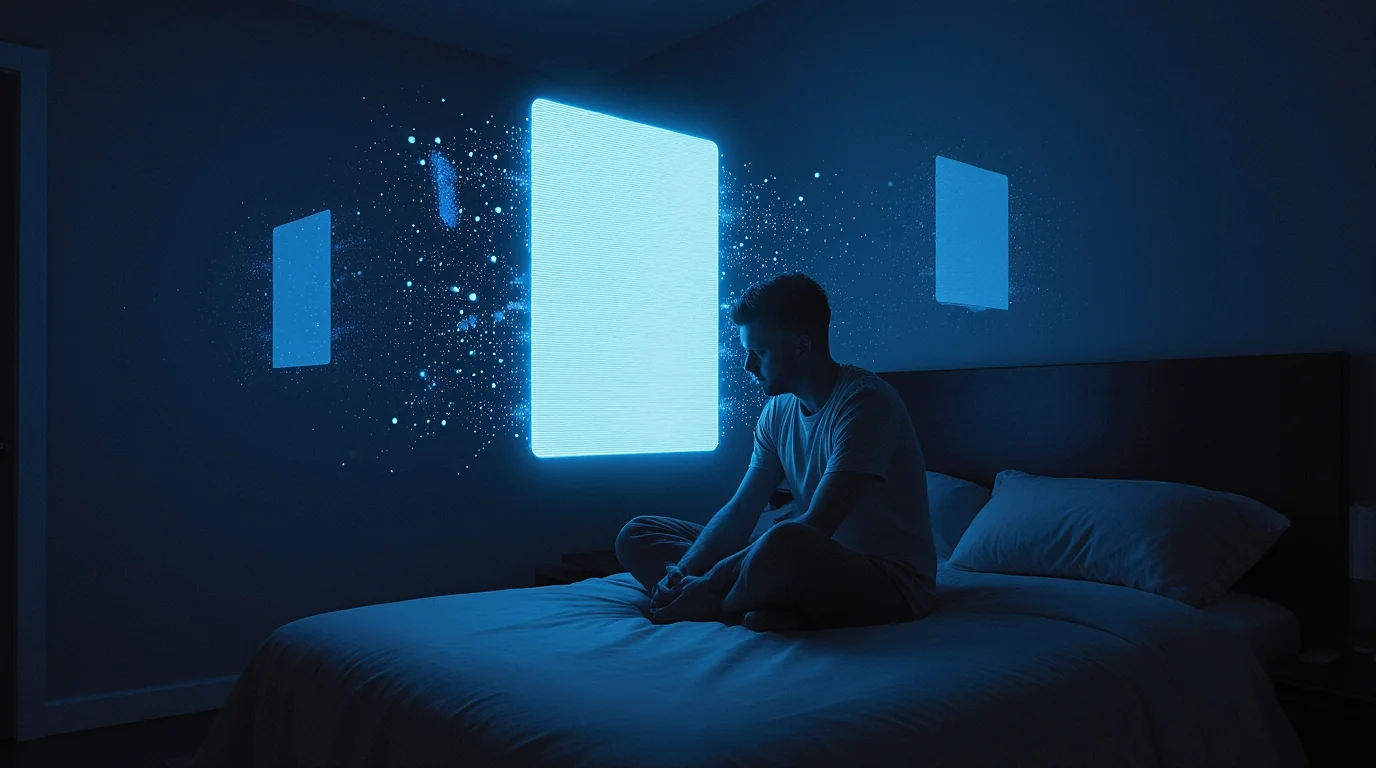
The Offline Consequences of Online Excess: Why Modern Men Are Losing Their Sensation
Let’s be real for a second. We are living in the golden age of excess.
Open Instagram, and you’re bombarded with influencers living lives that seem too saturated to be real. Open TikTok, and the algorithm feeds you dopamine hits every 15 seconds. We have 5G internet, 4K streaming, and VR headsets that promise to take us anywhere. We are the most stimulated generation in human history.
But there is a dark side to this “always-on,” high-velocity lifestyle that rarely makes it onto the explore page. While we are busy upgrading our bandwidth and our screens, a growing number of men are discovering a terrifying glitch in their own hardware.
It starts subtly. You’re with a partner, the mood is right, everything is working technically… but you just can’t feel much. The friction feels muted. The finish line seems miles away.
In the dark corners of Reddit and men’s health forums, this phenomenon has a name: death grip syndrome. But let’s call it what it really is: a digital-age injury. It is the physical manifestation of a world that demands everything be faster, harder, and more intense than reality can ever provide.
The “Super-Stimulus” Trap
To understand why this is happening, we have to look at how the male brain processes reward.
In the 1950s, scientists discovered the concept of “super-normal stimuli.” They found that if you gave a bird an artificial egg that was bigger and brighter than a real egg, the bird would ignore its own real eggs and try to sit on the fake one.
The modern internet is that fake, giant egg.
For many men, “solo time” has evolved alongside technology. It’s no longer about imagination; it’s about high-speed, high-definition consumption. To match the visual intensity of what they are watching on screen, men unconsciously ramp up the physical intensity of their grip.
It becomes a biomechanical habit. A hand can apply pressure that is physically impossible for a human partner to replicate. It creates a vacuum-tight, friction-heavy environment that feels great in the moment—but it comes with a steep price.
The Biology of Numbness
Here is the science without the boring lecture. Your penis is packed with nerve endings, specifically things called mechanoreceptors. Some are designed to feel deep pressure (like a firm handshake), while others are designed to feel light texture and warmth (like a feather).
When you rely exclusively on the “death grip”—often dry, often tight, often fast—you are essentially blasting the deep-pressure nerves with heavy metal music while ignoring the subtle jazz of the light-touch nerves.
Over years of this routine, your brain adapts. It thinks, “Okay, I guess this crushing pressure is the only signal that matters.” It turns down the volume on everything else.
The result? When you finally get into bed with a real human being, who is soft, warm, and naturally lubricated, your brain is confused. It’s waiting for the “death grip.” It’s waiting for the super-stimulus. And when it doesn’t get it, it interprets the sensation as… boredom.
The Panic Spiral: “Is My Equipment Broken?”
This is usually the moment where panic sets in.
A man dealing with this desensitization often assumes the worst. He thinks he has Erectile Dysfunction (ED). He thinks he’s lost his attraction to his partner. He thinks his testosterone has tanked.
This panic creates a feedback loop. Anxiety releases cortisol, which kills erections faster than a cold shower. Now, you have a sensitivity issue and a performance anxiety issue.
This is where education becomes the most powerful drug. Platforms dedicated to modern men’s wellness, like SensualAdvisors, are crucial in breaking this spiral. They provide the context that most doctors won’t tell you: Desensitization is not ED.
Your equipment isn’t broken; it’s just badly calibrated. You haven’t lost your virility; you’ve just trained for a sprint on a treadmill and are now confused why running on grass feels different.
The Detox: Unplugging the Nervous System
So, how do you fix it? If the problem is “digital excess,” the solution must be a “sensory detox.”
In the influencer world, we talk about “dopamine fasting”—putting away the phone to reset our attention spans. We need to apply the same logic to our sex lives. This process is called somatic retraining, but you can think of it as “rehab for your nerves.”
The first step is arguably the hardest: you have to stop the death grip. Cold turkey.
For a few weeks, you have to deny your brain the specific, high-pressure stimulation it craves. If you are going to play solo, you have to change the method. You have to force your nervous system to hunt for the subtle signals again.
Tech vs. Tech: Using Gadgets to Heal
It sounds ironic, right? Using technology to fix a problem caused by technology. But hear me out.
While the internet broke your sensitivity, modern wellness engineering is fixing it. We aren’t talking about the cheap, novelty toys you see in gag gift shops. We are talking about a new wave of tech-assisted training units designed specifically for bio-feedback and sensation control.
Think of these devices as “training wheels” for your sensitivity.
For a guy who is used to a death grip, a partner feels like “nothing.” But a high-quality texture sleeve or a smart stroker offers a middle ground. It provides more texture than a hand, but less pressure than a death grip.
- The Bridge: These devices bridge the gap between the artificial intensity of your hand and the reality of a partner.
- Texture Over Pressure: By using a device with complex internal ribs and plenty of lube, you force your body to get off on texture (which mimics real life) rather than pressure (which damages nerves).
It’s bio-hacking your own anatomy. You are using a tool to lower your threshold, retraining your brain to register softer sensations as pleasurable again.
The “Real Life” payoff
Why does this matter? Why go through the trouble of retraining your nerves?
Because the “Influencer” lifestyle of constant, high-speed consumption is lonely. It’s a spectator sport. You are watching life happen on a screen, detached from the physical reality.
Death grip syndrome is just a symptom of that detachment. It’s your body telling you that you’ve drifted too far into the digital deep end.
Fixing your sensitivity isn’t just about lasting longer or finishing easier. It’s about presence. It’s about being able to feel the warmth of your partner’s skin and actually be there, instead of being stuck in your head chasing a digital fantasy.
Conclusion: Reclaiming Your Edge
In a world that is constantly screaming for your attention, taking control of your own physiology is the ultimate power move.
Don’t let your digital habits dictate your physical happiness. If you recognize yourself in this article, don’t feel shame—feel motivated. The human body is incredibly resilient. Your nerves can heal. Your sensitivity can return.
But it requires you to make a choice. You have to choose reality over the super-stimulus. You have to choose sensation over friction. You have to choose to unplug, so you can finally plug back into what actually matters.